Influence of Processing on Snack Eating Patterns
An educational explanation of how different levels of food processing influence the way snacks are consumed and the eating experience.
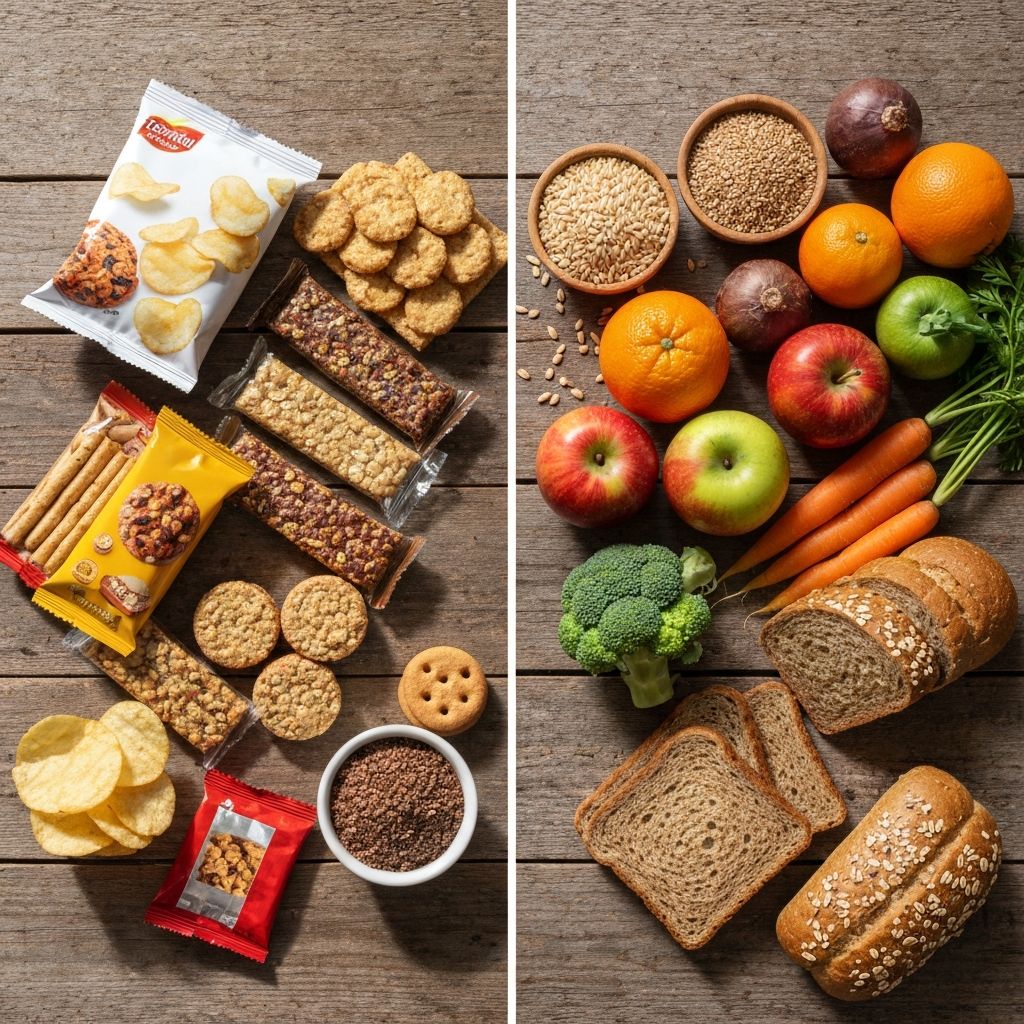
Understanding Food Processing
Food processing refers to the methods and transformations applied to raw ingredients to create consumer-ready foods. Processing levels vary widely:
- Minimal Processing: Simple preparation such as washing, cutting, refrigeration (fresh fruit, vegetable sticks)
- Limited Processing: Basic preparation and preservation such as freezing or drying (frozen berries, dried fruit)
- Moderate Processing: Common food preparation techniques including cooking, combination with other ingredients (oatcakes, plain popcorn)
- Extensive Processing: Multiple transformation steps, often including frying, addition of oils, seasoning, packaging (crisps, chocolate bars, biscuits)
This article explains how processing level influences various aspects of food consumption. This is purely informational.
Eating Rate and Consumption Pace
Processing level significantly influences how quickly foods are consumed:
Highly Processed Snacks
- Crisps: Low structural resistance, easy to bite through, small particle size, consumed very quickly
- Chocolate bars: Melting texture, smooth swallowing, can be consumed in minutes
- Biscuits: Discrete units, low chewing requirement, consumed at moderate pace
Whole Foods
- Fresh vegetables: High structural resistance, significant chewing required, consumed slowly
- Fresh fruit: Moderate structural resistance, chewing required, moderate consumption pace
- Nuts: High structural resistance, prolonged chewing, slower consumption
Eating rate is an observable difference between processed and whole foods. Whether this affects other aspects of food consumption varies between individuals.
Texture and Mouthfeel Effects
Processing creates different textures that influence the eating experience:
| Food Type | Primary Texture | Eating Experience |
|---|---|---|
| Crisps | Crispy, crunchy, thin | Immediate crunch, quick disintegration, strong sensory feedback |
| Chocolate | Smooth, melting, dense | Melts in mouth, creamy mouthfeel, prolonged taste sensation |
| Biscuits | Hard, crumbly, dense | Crumbles with chewing, moderate absorption |
| Carrot Sticks | Firm, watery, fibrous | High resistance, significant chewing, fresh taste, high volume relative to weight |
| Popcorn | Light, crispy, airy | Large volume, low weight, crispness, requires chewing |
| Apple Slices | Firm, watery, sweet | Resistance to bite, juiciness, natural sweetness, moderate chewing |
Texture influences taste perception, eating rate, and the subjective eating experience. These are observable differences between processed and whole foods.
Water Content and Hydration
Processing often removes water content from foods, which influences both eating experience and nutritional profile:
- High-Water Foods (Fresh Fruit/Vegetables): 80–90% water content, high volume, require longer eating time, provide hydration alongside nutrients
- Moderate-Water Foods (Oatcakes, Popcorn): 5–10% water content, moderate volume, moderate eating time
- Low-Water Foods (Crisps, Chocolate, Biscuits): Less than 5% water content, low volume relative to energy content, quick consumption, do not contribute to hydration
Water content is directly removed during processing (frying, drying) to extend shelf life and change texture. This is a structural difference between product categories.
Portion Control and Packaging Effects
Packaging influences consumption patterns:
- Pre-Packaged Single Serves: Crisps, chocolate bars, and biscuits often come in pre-determined portions (20–50g), which may influence total intake
- Bulk Packages: Some packaged snacks come in larger quantities without portion markers
- Whole Foods: Fresh fruits and vegetables typically lack portion markers, allowing individual serving decisions
Pre-packaged portions are a marketing and convenience feature of processed foods. Whether this influences consumption behaviour varies between individuals.
Flavour Engineering in Processed Foods
Food processing allows for flavour concentration and engineering:
- Packaged Snacks: Contain added flavourings, salt, and seasonings designed for strong, consistent taste profiles that may encourage continued consumption
- Whole Foods: Have naturally varying, subtle flavours determined by growing conditions, ripeness, and individual variation
Flavour intensity is a designed characteristic of processed snacks versus the naturally variable flavours of whole foods. This is informational.
Shelf Life and Convenience Effects
Processing extends shelf life, which affects food availability and accessibility:
- Highly Processed Snacks: Shelf-stable for months or years, always available, no preparation required, portable
- Fresh Foods: Short shelf life (days to weeks), require refrigeration, spoil naturally, require preparation
The extended shelf life and convenience of processed snacks are by design and influence availability patterns in households. This is observational and factual.
Satiety and Processing: Individual Variation
Processing influences aspects of food that relate to satiety, but individual responses vary widely. Factors affected by processing level include:
- Eating rate (slower eating can relate to increased satiety signalling)
- Fibre content (higher in whole foods, lower in processed)
- Water content (higher in whole foods, lower in processed)
- Chewing requirement (higher in whole foods)
However, individual satiety responses are complex and influenced by many factors including appetite regulation, taste preferences, portion size norms, and many other variables. Satiety is subjective and highly variable between individuals. This information is purely educational.
Summary: Observable Differences
| Aspect | Highly Processed Snacks | Minimally Processed Whole Foods |
|---|---|---|
| Eating Rate | Fast | Slow |
| Chewing Requirement | Minimal | Significant |
| Water Content | Very Low | Very High |
| Fibre Content | Minimal | Moderate-High |
| Flavour Profile | Engineered, Intense | Natural, Variable |
| Shelf Life | Very Long | Short |
| Portion Control | Pre-Packaged | Individual Choice |
Informational Context
This article presents factual information about food processing and its observable effects on food characteristics and eating experience. Individual responses to different foods vary widely and are influenced by many complex factors. This information is educational only and does not provide dietary advice, health recommendations, or outcome predictions. For professional guidance, consult qualified healthcare professionals.